This is our Friday rubric: every week a new Science Page from the Bob Morrison’s Swine Health Monitoring Project. The previous editions of the science page are available on our website.
Dr. Iseki and colleagues from the National Institute of Animal Health (NIAH, Japan) present studies on heterologous protection between Japanese type 1 and type 2 porcine reproductive and respiratory syndrome virus (PRRSV) isolates. The level of cross-protection that a type 2-based PRRSV vaccine can confer against various type 1 PRRSV field strains is important because no type 1 PRRSV-based vaccine is commercially available in Japan. Find this work here as an advanced publication of the Journal of Veterinary Medical Science.
Key Points:
This study evaluated the cross-protective immunity between type 1 and type 2 PRRSV isolates in growing pigs.
Immunity induced by the type 1 infection may play a role in reducing viremia caused by the type 2 PRRSV.
The immunity induced by the type 2 may not contribute to cross-protection against the type 1.
This is our Friday rubric: every week a new Science Page from the Bob Morrison’s Swine Health Monitoring Project. The previous editions of the science page are available on our website.
This week we are sharing a summary of a publication of Lei et al. regarding the illegal importation of pork products coming from China into Japan, especially in the context of African Swine Fever.
Key Points
Importation of infected pork and contaminated pork products is a known source of disease introduction into naive countries.
A study was conducted to assess the risk of disease introduction through illegal pork imports and to identify factors affecting perception and behavior regarding illegal imports.
A significant association between perception of difficulty of importing a pork product in their luggage, knowledge of illegality, and actual illegal importation was found.
Compared to an earlier survey, the results from this suggest that government education and enforcement measures have made a measurable impact
Classical Swine fever reported in Japan 26 years after last outbreak
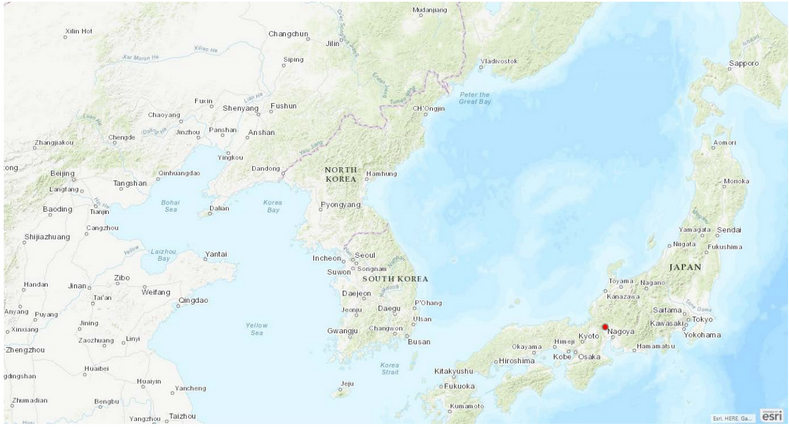
On Sunday September 9th, Japan reported the occurrence of Classical Swine fever, in a farm located at Gifu Prefecture, in the central area of the country. Last week, one pig died suddenly, followed by the mortality of 80 others. On Sunday, officials declared the animals as tested positive for Classical Swine fever (CSF), also known as Hog Cholera. Currently, China is facing an epidemic of African Swine Fever, which is totally unrelated to this event in Japan. To date, Japanese Veterinary Services have ruled out the occurrence of African Swine Fever (ASF) in this outbreak or in the country.
A task force was implemented, and the remaining 610 pigs were culled to contain the outbreak. By Monday morning (local time) depopulation of the farm was completed. At first, no clear origin of infection was identified as feed was commercial, nor there were known foreign labors or visits from countries endemic with CSF working in the farm. At this point, cause of the virus introduction is unknown and under investigation.
Exports of pork have been suspended until the Veterinary Services are capable of understand the extension of the outbreak and if the measures were sufficient to contain it, while investigations about possible routes of introduction are implemented as well. The Gifu Prefecture is not the major area of swine production, and it is located 500 miles (800 kilometers) from the south region, the highest pig-dense area.
Figure 1: Map of Japan, and Prefectures. In red, location of the Gifu Prefecture, in Central Japan. The highest pig-dense area of Japan is located in the south region of the country (adapted from Sasaki et al.,2017) approximately 500 miles (800 km) from Gifu Prefecture by road.
CSF is a notifiable disease and affects the international trade of pork, however, clinically it is usually considered less severe than ASF. Currently, it is considered endemic in many countries, including China, therefore it is a disease with potential direct and indirect effects to the US industry. Depending on the strain, extensions of outbreak, route of introduction and effectiveness of biosecurity measures to contain and prevent re-introductions, it could offer different levels of risk. Commercial vaccines are available for CSF control.
The last CSF outbreak in Japan was in 1992 in Kumamoto Prefecture, and in 2007 the use of vaccination was banned, and disease eradication was declared in the country. The Japanese swine industry is still recovering from the 2013-2016 PED epidemic. On July 9th-2018, APHIS published the official notice of the OIE recognition of Japan as free CSF. Currently Japan exports pork, and it is in the top-10 pork producing countries in the world. FAS/Tokyo estimates Japanese swine slaughter held stable at 16.336 million head in 2017.
At this point, no other cases of CSF are suspected in Japan.
Figure 2: Report of classical Swine Fever in Japan. In red, Gifu Prefecture in Japan, located in the central area of the country. Score 2.*
*SDGS – Significance score: A scoring system to assess the likelihood a disease event will impact the global swine industry. Scores range from 1-3 (low-high) based on the novelty of the disease, effect on the swine industry, and impact on trade.