Science Page: Continued reporting on unusual CNS cases

This is our Friday rubric: every week a new Science Page from the Bob Morrison’s Swine Health Monitoring Project. The previous editions of the science page are available on our website.

This week, the Science Page focuses on unusual Central Nervous system (CNS) cases that have been emerging in the past few years. Etiological agents like porcine teschovirus (PTV), porcine enteroviruses (PEV), porcine sapelovirus (PSV), and atypical porcine pestivirus (APPV) have been implicated in those cases leading to the creation of a set of criteria to positively identify a CNS case.

Three criteria are therefore required: identifying the clinical signs, a positive PCR test for one or more of the viruses, and histological results consistent with viral encephalitis from spinal cord or brain tissue.

Key points from this week edition:

  • An apparent increase in the number of cases associate with atypical neurological signs have been observed over the last two years.
  • Since then, the Veterinary Diagnostic Laboratories (VDLs) have identified a set of criteria required to meet the CNS case definition.
  • MSHMP will continue reporting CNS cases diagnosed at the KSU, ISU, SDSU, and UMN VDLs.

Take a look at the number of cases recorded since September 2016.

Eliana Silva Paladino and Jose Angulo to receive Pijoan and Leman swine fellowships.

The recipients of the Pijoan and Leman fellowships were revealed last week and we are proud to announce that two great candidates were selected.

paladino_elianaDr. Eliana Silva Paladino is receiving the Carlos Pijoan fellowship. Eliana obtained her DVM and MS degrees in Brazil and is currently a PhD student advised by Dr. Julio Alvarez. Eliana’s PhD is focusing on the application of quantitative tools for the management of problems of relevance to the swine industry at both the farm and population (i.e., supra-farm) levels. She is currently focusing on developing systems to quantify the effect of endemic diseases such as swine influenza and the management strategies adopted for their control in affected farms. She is also working on the assessment of trends in submissions received at veterinary diagnostic laboratories over time to evaluate the impact of changes in disease distribution, diagnostic approaches and farm management in the U.S.
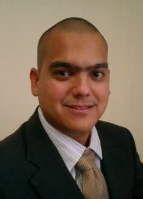
jose_angulo Dr. Jose Angulo is receiving the Allen Leman fellowship. Jose obtained his DVM degree in Mexico and is currently a PRRS specialist and managing veterinarian for Zoetis in charge of U.S. customers. Jose will be completing his Masters in Dr. Montse Torremorell’s lab and his work will focus on understanding PRRS infections in growing pigs and how to prevent them.

Science Page: PRRS cumulative incidence by status

This is our Friday rubric: every week a new Science Page from the Bob Morrison’s Swine Health Monitoring Project. The previous editions of the science page are available on our website.

How does PRRS incidence vary based on farm status? This is the question answered in this week’s edition of the Science Page. Three different formulas were used to calculate the incidence in each of the group over type. First, the initial number of farms of each status at the beginning of the year was used as the denominator. Then, the denominator was changed to the total number of farms that entered each status since the beginning of the year. Lastly, weekly incidences calculated for each of the group since the beginning of the year were added. Calculations went back for the last 3 years.

Key points from this week edition:

  • Cumulative incidence is higher in those farms that are under status 2, 2vx and 2fvi.
  • The incidence is lower in farms that had recently an outbreak or those that are completely negative.
  • Different ways of calculating incidence by herd status lead to the same overall conclusion.

Take a look at PRRS incidences in farms of group 2 status, vaccinated or inoculated with live virus over the past years.

PhD seminar: Epidemiological investigation of a non-reportable endemic disease: PRRS in the US

Title: Epidemiological investigation of a non-reportable endemic disease: Porcine reproductive and respiratory syndrome (PRRS) in the US

Presented by:   Pablo Valdes-Donoso

Date:    Friday, June 9, 2017
Time:    3:00 – 4:00 pm
Place:    385-J, AS/VM Building

Abstract: Porcine reproductive and respiratory syndrome (PRRS), caused by a highly mutagenic and resistant RNA-virus, is an endemic disease that has been noted as one of the most important animal production diseases in the US because of its large economic damage on the swine industry. Nonetheless, there is no official control framework for this disease, so producers rely on voluntary regional control programs (RCPs) for its mitigation. Despite efforts to control PRRS, it persists in the environment, affecting a large number of farms every year. Using information shared by a specific RCP (RCP-N212), this dissertation focused on important aspects of PRRS dynamics within an RCP. Specifically, this dissertation encompassed five chapters. An introductory chapter is followed by the second chapter, which quantifies the extent to which RCPs contribute to PRRS control. After that, a prediction of network structure was made to forecast animal movements among farms within the RCP-N212. Then, longitudinal data collected from sow farms were used to measure the impacts of PRRS on production. Finally, a disaggregated disease diffusion model was used to depict PRRS dynamics within the RCP-N212, as well as to evaluate individual and collective strategies adopted by producers. This dissertation provides insight to the evaluation of regional control strategies that may be used as a framework for a formal PRRS control program.

The latest trends in PRRSV diagnostics: less serum samples, more oral fluids, and more 1-7-4 RFLP pattern

Today, Dr. Albert Rovira from the University of Minnesota, Veterinary Diagnostic Laboratory shares with us the trends he has observed in PRRSV diagnostics over the past years. The findings can be found in the slideshow below.

  • The use of tissue samples follows a seasonal pattern and represents clinical cases with a percent of positives of 30%
  • The number of oral fluid samples is increasing. Used for monitoring positive farms and more recently for surveillance in negative farms as well:: 15% of positive samples
  • The number of blood swabs, serum samples, and semen samples, typically used for surveillance in negative farms, is decreasing. Lowest percent of positive samples: 8%
  • RFLP patterns are changing over time. In the past years, 1-7-4 > 1-3-4 or 1-8-4 or 1-4-4
Reminder: what is a RFLP pattern?

RFLP stands for Restriction Fragment Length Polymorphism and is a technique used to detect nucleotide changes in a genetic sequence. The genetic material is put in contact with restriction enzymes which are very specific to a genetic sequence. If the enzyme recognizes the sequence pattern, it will cleave the DNA or RNA fragment. After that, a type is determined based on the number of fragments and its size.

For example with PRRSV, three enzymes are used and the number of fragments each of them produces makes up the numbers of the RFLP pattern. Currently, the RFLP type is not actually performed in the lab. Instead, it is predicted based on the ORF5 RNA sequence and the knowledge of the cutting capabilities of each enzyme.

Therefore, the RFLP pattern gives us a way to cluster PRRSV strains in groups but very little indication about how similar they are to each other.