Bioaerosol sampling for airborne virus surveillance in swine facilities

Bioaerosol sampling refers to the methods by which one is able to collect the particles of biological origin (microbial, animal, or plant) in the air. This is useful information in swine production because many economically important pathogens can be transmitted by air from one farm to the next. 73 scientific reports were included in this review published in the journal Frontiers in Veterinary Science. The information regarding the presence of viruses in the air around swine settings is limited but their findings has been compiled in the figure below. Overall, bioaerosol sampling could be a promising way to conduct non-invasive viral surveillance among swine farms.

Viruses detected in radisuses around farms
Influenza A, PRRSV, PEDV detection downwind from farms with infected source populations

Abstract

Modern swine production facilities typically house dense populations of pigs and may harbor a variety of potentially zoonotic viruses that can pass from one pig generation to another and periodically infect human caretakers. Bioaerosol sampling is a common technique that has been used to conduct microbial risk assessments in swine production, and other similar settings, for a number of years. However, much of this work seems to have been focused on the detection of non-viral microbial agents (i.e., bacteria, fungi, endotoxins, etc.), and efforts to detect viral aerosols in pig farms seem sparse. Data generated by such studies would be particularly useful for assessments of virus transmission and ecology. Here, we summarize the results of a literature review conducted to identify published articles related to bioaerosol generation and detection within swine production facilities, with a focus on airborne viruses. We identified 73 scientific reports, published between 1991 and 2017, which were included in this review. Of these, 19 (26.7%) used sampling methodology for the detection of viruses. Our findings show that bioaerosol sampling methodologies in swine production settings have predominately focused on the detection of bacteria and fungi, with no apparent standardization between different approaches. Information, specifically regarding virus aerosol burden in swine production settings, appears to be limited. However, the number of viral aerosol studies has markedly increased in the past 5 years. With the advent of new sampling technologies and improved diagnostics, viral bioaerosol sampling could be a promising way to conduct non-invasive viral surveillance among swine farms.

Link to the full article

Several influenza A genotypes detected in the same farm, sub-population, and pig

In this collaborative open-access research article from the University of Minnesota, five commercial sow farms were sampled regularly over a year. Sows, gilts, and piglets was sampled with nasal swabs. A little less than 5% of the samples were PCR positive for influenza A. The strains were classified in 7 groups based on their hemagglutinin (a surface protein of the virus) sequences. One additional group was created based on another gene segment.

Complete genome sequencing influenza A Diaz 2017

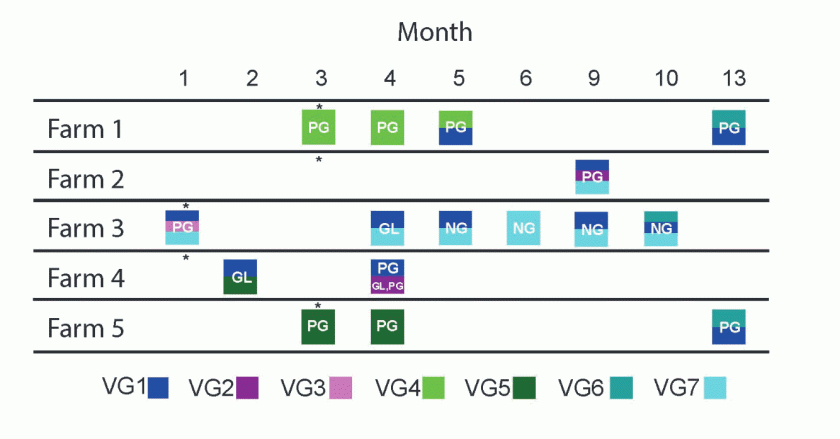
Several viral groups were detected in the sub-populations of all of the 5 farms, as shown in the figure below. Influenza strains combined segments from several viral groups were detected in three farms. Additionally, several strains were detected in individual animals showing the potential for reassortment and creation of new influenza strains.

Complete genome sequencing influenza A Diaz 2017 group
Influenza viral groups (VG) detected in each farm sub-populations over time (PG:piglets, GL: gilts, NG: new gilts)   *: month during which sampling started.

Abstract

Influenza A viruses (IAVs) are endemic in swine and represent a public health risk. However, there is limited information on the genetic diversity of swine IAVs within farrow-to-wean farms, which is where most pigs are born. In this longitudinal study, we sampled 5 farrow-to-wean farms during a year and collected 4,190 individual nasal swabs from three distinct pig subpopulations. 207 (4.9%) samples tested PCR positive for IAV, and 124 IAVs were isolated. We sequenced the complete genome of 123 IAV isolates, and found 31 H1N1, 26 H1N2, 63 H3N2 and 3 mixed IAVs. Based on the IAV hemagglutinin seven different influenza A viral groups (VGs) were identified. Most of the remaining IAV gene segments allowed us to differentiate the same VGs although an additional viral group was identified for gene segment 3 (PA). Moreover, the co-detection of more than one IAV VG was documented at different levels (farm, subpopulation, and individual pigs) highlighting the environment for potential IAV reassortment. Additionally, three out of 5 farms contained IAV isolates (n=5) with gene segments from more than one VG, and 79% of all IAVs sequenced contained a signature mutation (S31N) in the matrix gene that has been associated with resistance to the antiviral amantadine. Within farms, some IAVs were only detected once while others were detected for 283 days. Our results illustrate the maintenance and subsidence of different IAVs within swine farrow-to-wean farms over time, demonstrating that pig subpopulation dynamics is important to better understand the diversity and epidemiology of swine IAVs.

IMPORTANCE At the global scale swine are one of the main reservoir species for influenza A viruses (IAVs), and play a key role on the transmission of IAVs between species. Additionally, the 2009 IAV pandemics highlighted the role of pigs in the emergence of IAVs with pandemic potential. However, limited information is available regarding the diversity and distribution of swine IAVs in farrow-to-wean farms where novel IAVs can emerge. In this study we studied 5 swine farrow-to-wean farms during a year and characterized the genetic diversity of IAVs among three different pig subpopulations commonly housed in this type of farms. Using next generation sequencing technologies, we demonstrated the complex distribution and diversity of IAVs among the pig subpopulations studied. Our results demonstrated the dynamic evolution of IAVs within farrow-to-wean farms, which is crucial to improve health interventions to reduce the risk of transmission between pigs and from pigs to people.

Link to the full open-access article

Science Page: Detecting influenza virus with a portable device

This is our Friday rubric: every week a new Science Page from the Bob Morrison’s Swine Health Monitoring Project. The previous editions of the science page are available on our website.

We are presenting today the work done in Dr. Cheeran’s lab on the detection of influenza virus in farms. The objective of their research project is to develop a portable diagnostic platform that is capable of performing on-site testing of influenza viruses in swine with minimum sample handling and laboratory skill requirements.

The device is using giant magnetoresistance (GMR) technology. In a nutshell, if influenza viruses are present in the sample, they will bind to sensors, cause a disruption in resistance, and create an electric signal in the device that will be able to wirelessly transmit the result to a smartphone or computer.

Key points from this week edition:

  • Portable, hand held device for detection of influenza A virus (IAV) based on giant magnetoresistance (GMR) biosensor has been developed.
  • Although in its developmental stage, if successful this test has the potential for rapid on-site testing of influenza viruses in swine.

The first sensitivity tests of the device look very promising!

Air samples successful in detecting on-farm PRRSV, PEDV, and high-path avian influenza virus

Reducing the likelihood of a piglet reservoir when dealing with influenza in swine herds

Drs. White, Torremorell and Craft from the University of Minnesota recently published an article in Preventative Veterinary Medicine regarding practices that can decrease the likelihood of creating an endemic piglet reservoir in the case of an infection by swine influenza. Indeed, a stochastic model was developed considering that the pigs were in one of the following categories: Susceptible, Exposed,  Infectious, Recovered, or Vaccinated. Loss of immunity over time and differences between naturally infected and vaccinated animals were taken into account. Several scenarios were evaluated regarding their impact on piglet prevalence: timing of gilt introductions, gilt separation, gilt vaccination upon arrival, early weaning, and sow vaccination strategies.

In this model, homologous mass vaccination and early weaning were the most efficacious interventions. By combining frequent homologous mass vaccination, early weaning, gilt separation, gilt vaccination and longer periods between gilt introductions reduced endemic prevalence overall by 51% relative to the null scenario and the endemic prevalence in piglets by 74%.

influenza-a-piglet-reservoir-torremorell

Abstract: Recent modelling and empirical work on influenza A virus (IAV) suggests that piglets play an important role as an endemic reservoir. The objective of this study is to test intervention strategies aimed at reducing the incidence of IAV in piglets and ideally, preventing piglets from becoming exposed in the first place. These interventions include biosecurity measures, vaccination, and management options that swine producers may employ individually or jointly to control IAV in their herds. We have developed a stochastic Susceptible-Exposed-Infectious-Recovered-Vaccinated (SEIRV) model that reflects the spatial organization of a standard breeding herd and accounts for the different production classes of pigs therein. Notably, this model allows for loss of immunity for vaccinated and recovered animals, and for vaccinated animals to have different latency and infectious periods from unvaccinated animals as suggested by the literature. The interventions tested include: (1) varied timing of gilt introductions to the breeding herd, (2) gilt separation (no indirect transmission to or from the gilt development unit), (3) gilt vaccination upon arrival to the farm, (4) early weaning, and (5) vaccination strategies of sows with different timing (mass and pre-farrow) and efficacy (homologous vs. heterologous). We conducted a Latin Hypercube Sampling and Partial Rank Correlation Coefficient (LHS-PRCC) analysis combined with random forest analysis to assess the relative importance of each epidemiological parameter in determining epidemic outcomes. In concert, mass vaccination, early weaning of piglets (removal 0–7 days after birth), gilt separation, gilt vaccination, and longer periods between introductions of gilts (6 months) were the most effective at reducing prevalence. Endemic prevalence overall was reduced by 51% relative to the null case; endemic prevalence in piglets was reduced by 74%; and IAV was eliminated completely from the herd in 23% of all simulations. Importantly, elimination of IAV was most likely to occur within the first few days of an epidemic. The latency period, infectious period, duration of immunity, and transmission rate for piglets with maternal immunity had the highest correlation with three separate measures of IAV prevalence; therefore, these are parameters that warrant increased attention for obtaining empirical estimates. Our findings support other studies suggesting that piglets play a key role in maintaining IAV in breeding herds. We recommend biosecurity measures in combination with targeted homologous vaccination or vaccines that provide wider cross-protective immunity to prevent incursions of virus to the farm and subsequent establishment of an infected piglet reservoir.

Link to the full article